All Saints, Thornham
At a glance
Next service
Fifteenth Sunday of Trinity
9.00 am, Harvest
Common Worship
Opening and contact
The church is usually open from 8am till approximately 5pm every day.
Churchwarden
Mrs Janet Needham
01485 512460cwthornham@saxonshorebenefice.co.uk
Safeguarding information
We at All Saints, Thornham take safeguarding very seriously.
If you have concerns about the safety of someone or the actions of a person working with children or vulnerable adults, please speak out.
Our Parish Safeguarding Officer (PSO) is Janet Needham. You can contact her on 01485 512460 or 07900 654123 or email her on janetaneedham@gmail.com
There is also a Diocesan Safeguarding Team, you can call them on 01603 882345 or email safeguarding@dioceseofnorwich.org
Alternatively you can contact our Norfolk County Council Social Services on 0344 800 8020.
If you think someone is in immediate danger, call the police on 999.
'See something, hear something, say something'
Bats and a warm welcome
For generations Thornham has hosted a maternity colony of Pipistrelle bats in the summer months, which were considered a nuisance as they damaged furniture and memorials with their droppings. In 2019 a National Lottery funded project called "Bats in Churches" chose Thornham church as one of the many churches to benefit from their surveys and mitigation. Special bat boxes were designed and installed at the known bat exits in the church. Since the summer of 2022 there have been very few bats in the church. We wait to see if this will be permanent.
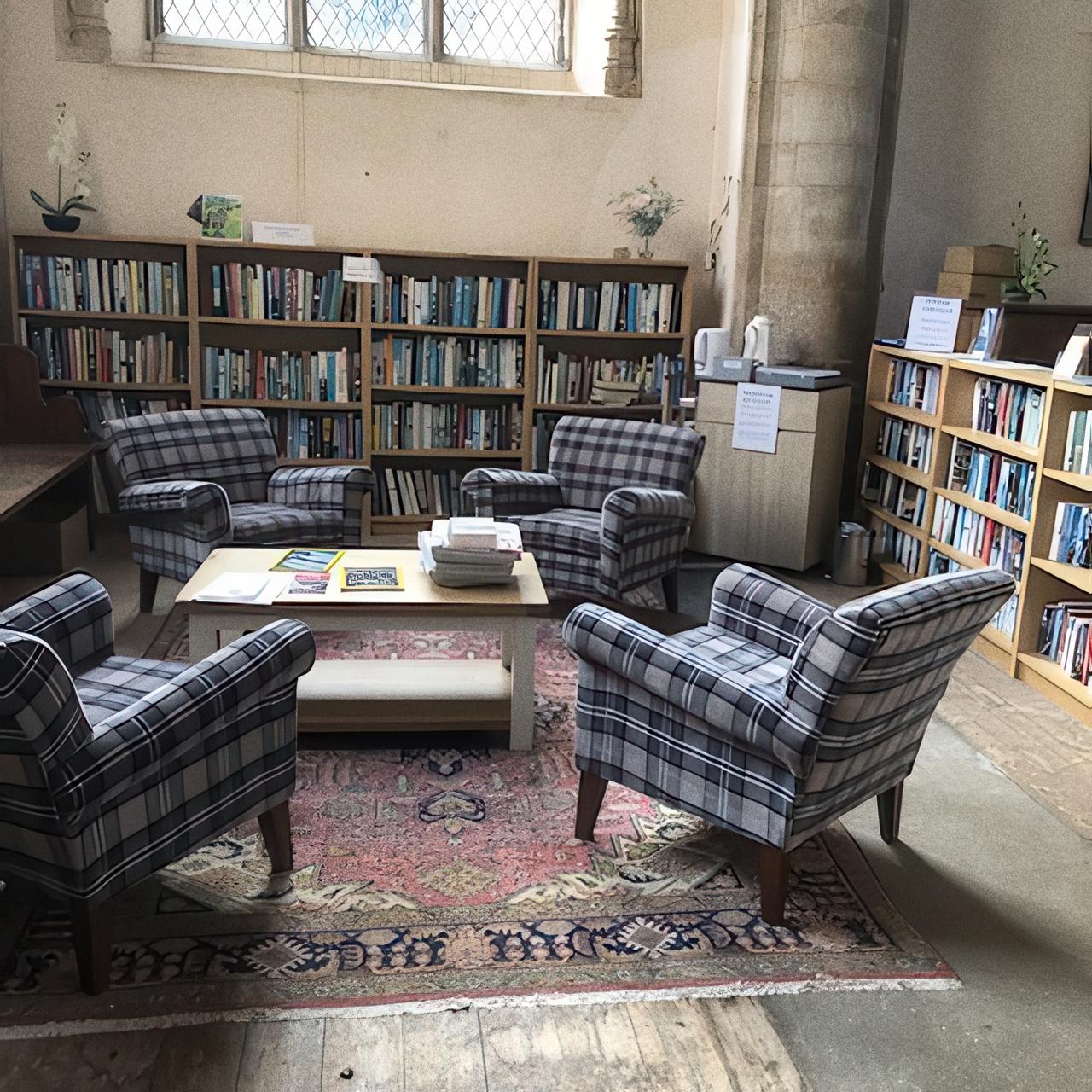
In 2023 the Welcome area and book stalls were improved with the addition of new bookshelves and comfortable chairs.
A self-service hot drinks trolley was also installed for visitors to use when visiting the church.
About the church
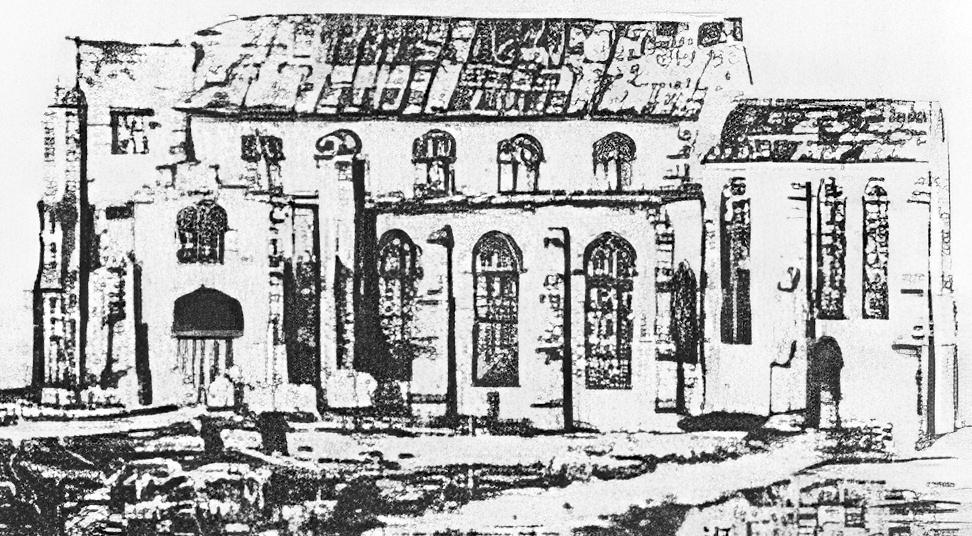
Engraving by J.B. Ladbrooke, 1820
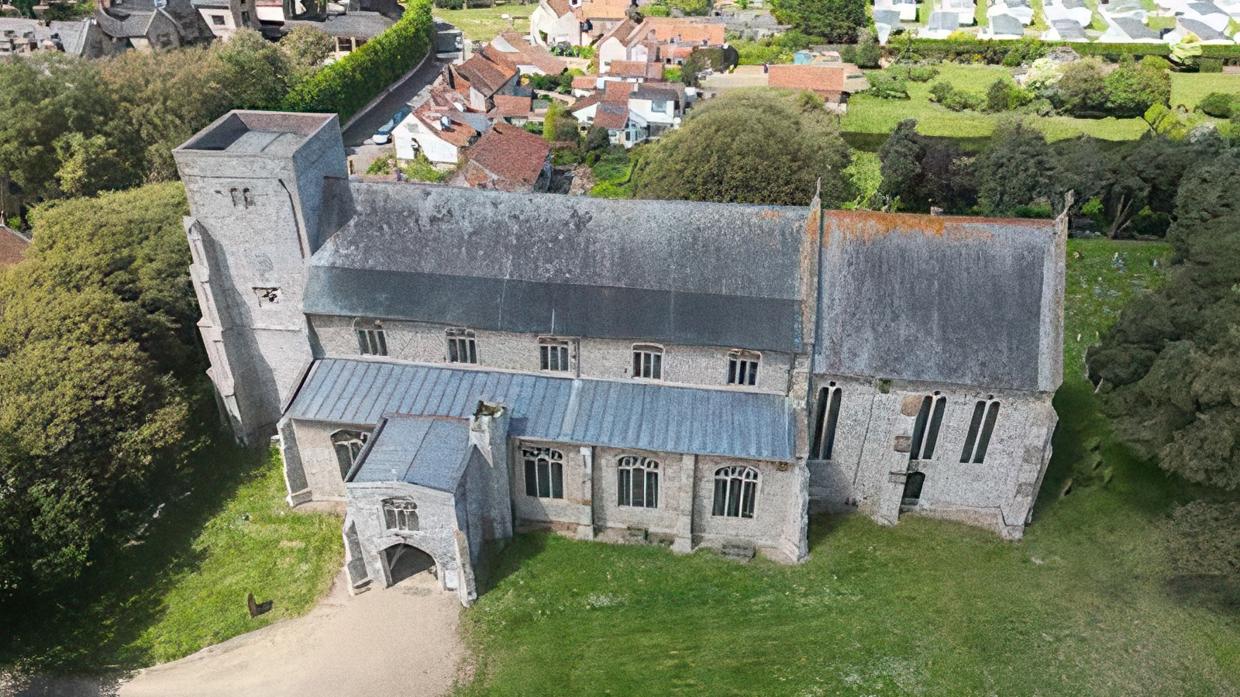
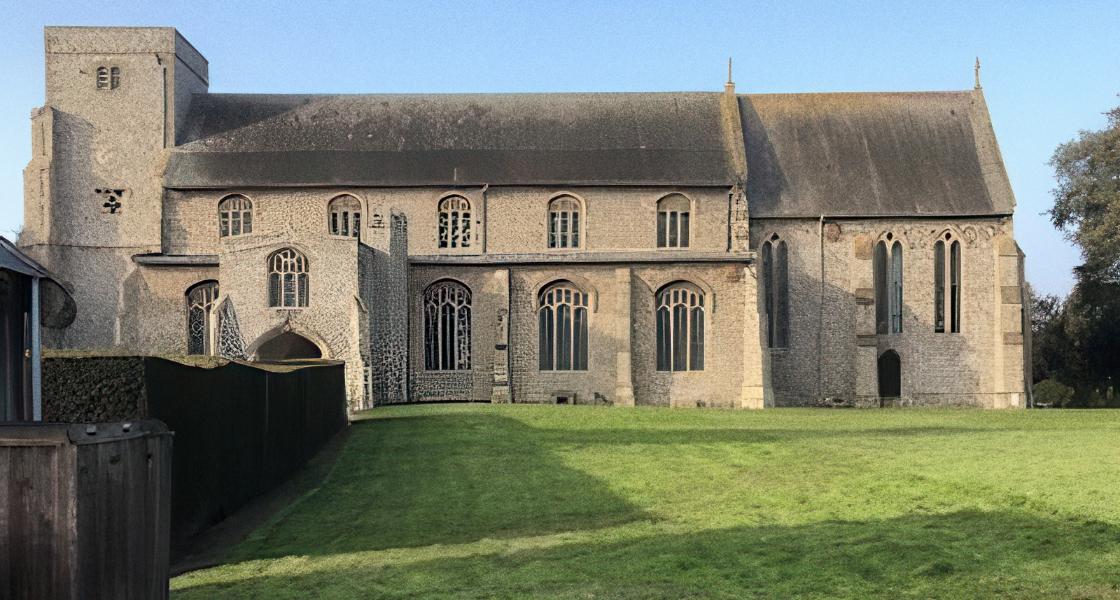
Despite extensive restoration, the exterior of the church, with the exception of the tower, is of very similar appearance to that shown in the engraving by J.B. Ladbrooke in 1820. The tower, started in 1633, was left unfinished because, after the Great Fire of London in 1666, the masons departed to rebuild London. It was not to be completed until 1935 when it was built to commemorate King George V's Silver Jubilee.
Thornham Church was started in Norman times, but building came to an abrupt stop in 1348 with the scourge of the Black Death. (It is thought that the spinney named Plug Pits in Granary Road, Thornham is the former burial ground called Plague Pits.)
The Church, like so many, was added to through the centuries and much restoration took place. By the middle of the nineteenth century, however, the church had become extremely dilapidated. Major works of restoration continued for 50 years in that century. The bell was re-hung in the tower, the chancel was completely rebuilt and the roof of the nave was restored.
The South Porch
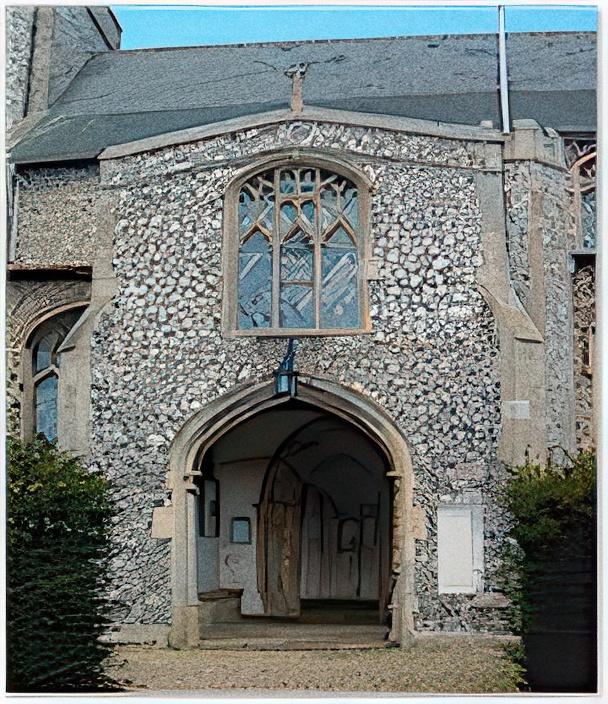
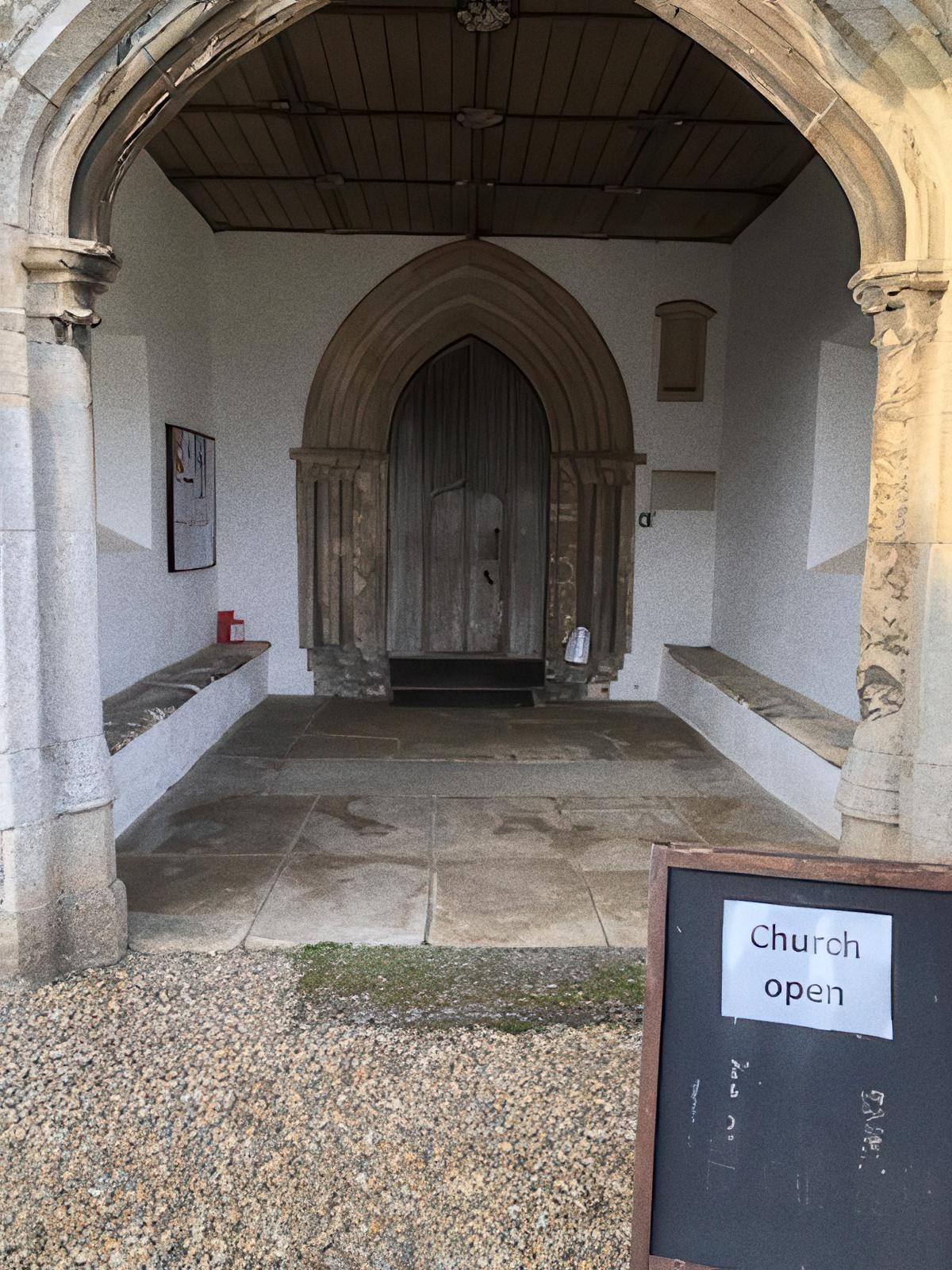
The upper chamber is approached by a stair in the small turret seen on the right of the picture.
The entrance to the church is through the 13th century doorway which has a fine 15th century perpendicular door with a wicket door for general use. There is a small carving at the top of the door showing a fox preaching to a congregation of geese!
Interior
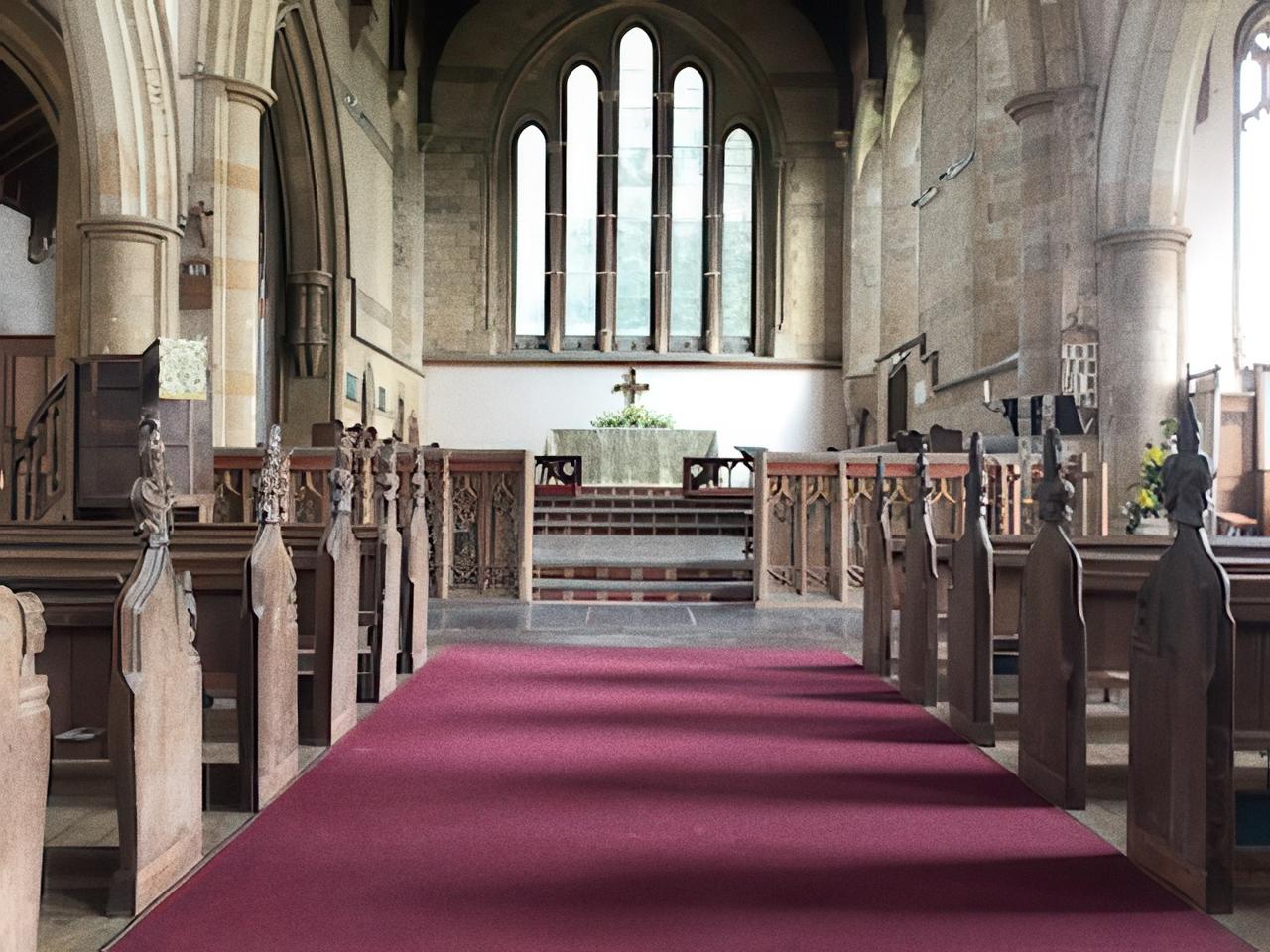
The centre aisle of the nave showing the rood screen and carvings on the bench ends
The very wide nave has arcades with thirteenth century columns, reset on higher bases when the church was largely rebuilt towards the end of the fifteenth century. At this time the clerestory windows were added above the heightened arcade and the fine hammerbeam roof was constructed. It rests on large corbel brackets with carved heads re-used from the earlier church.
The principal benefactors to the church in the fifteenth century were the Miller family, wealthy local merchants. Brass inscriptions to Simon Miller who died in 1464 and his son John Miller 1488 are reset in the south aisle.
The bench ends
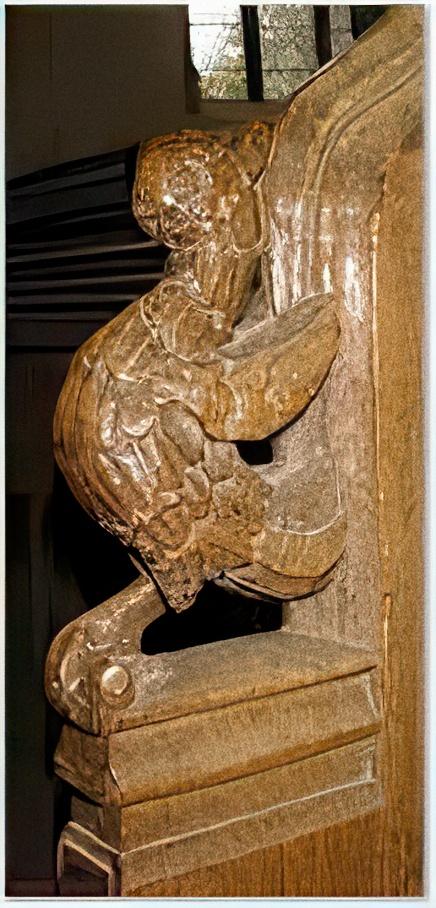
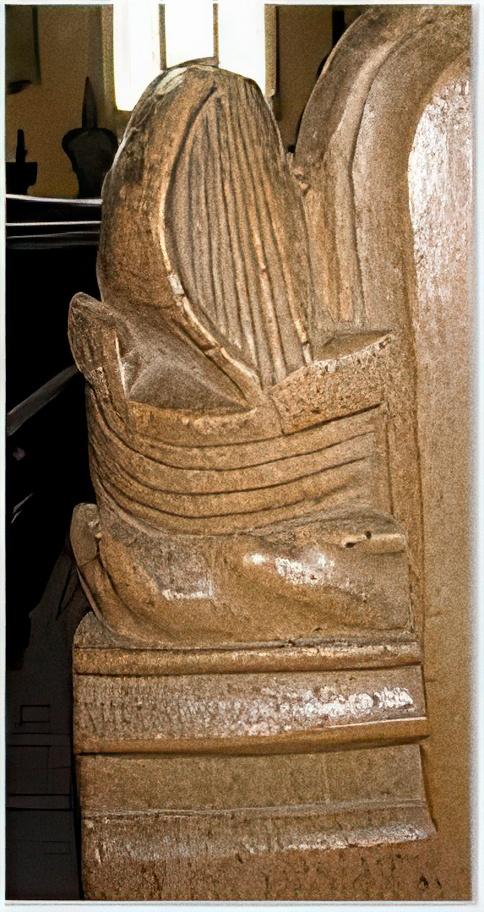
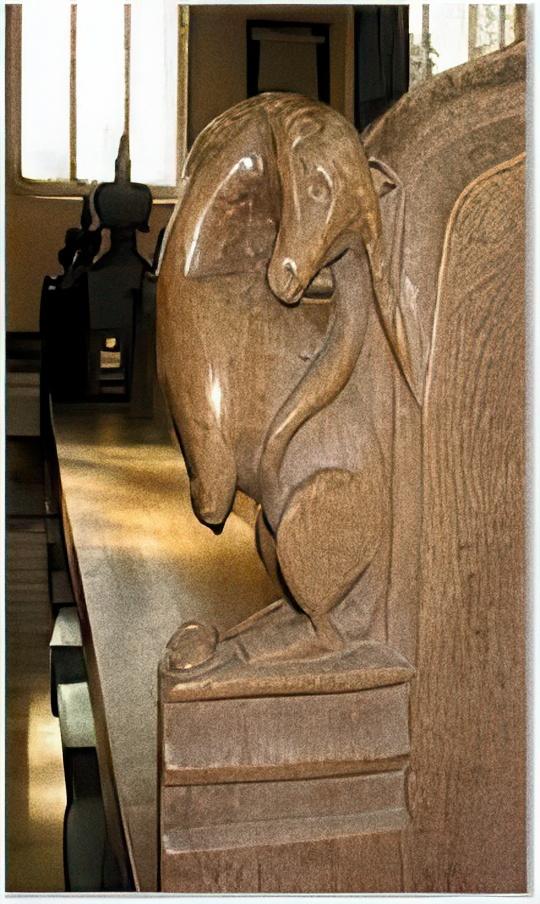
These bench ends date from the 15th century and have poppy-heads and carved arms. As well as the three shown above the figured arms include a chalice and three others represent Anger, Drunkenness and Sloth. Although it can be seen that the bench ends have sustained some damage, it should also be noted that great care is taken of these ancient carvings.
The Chancel and Altar
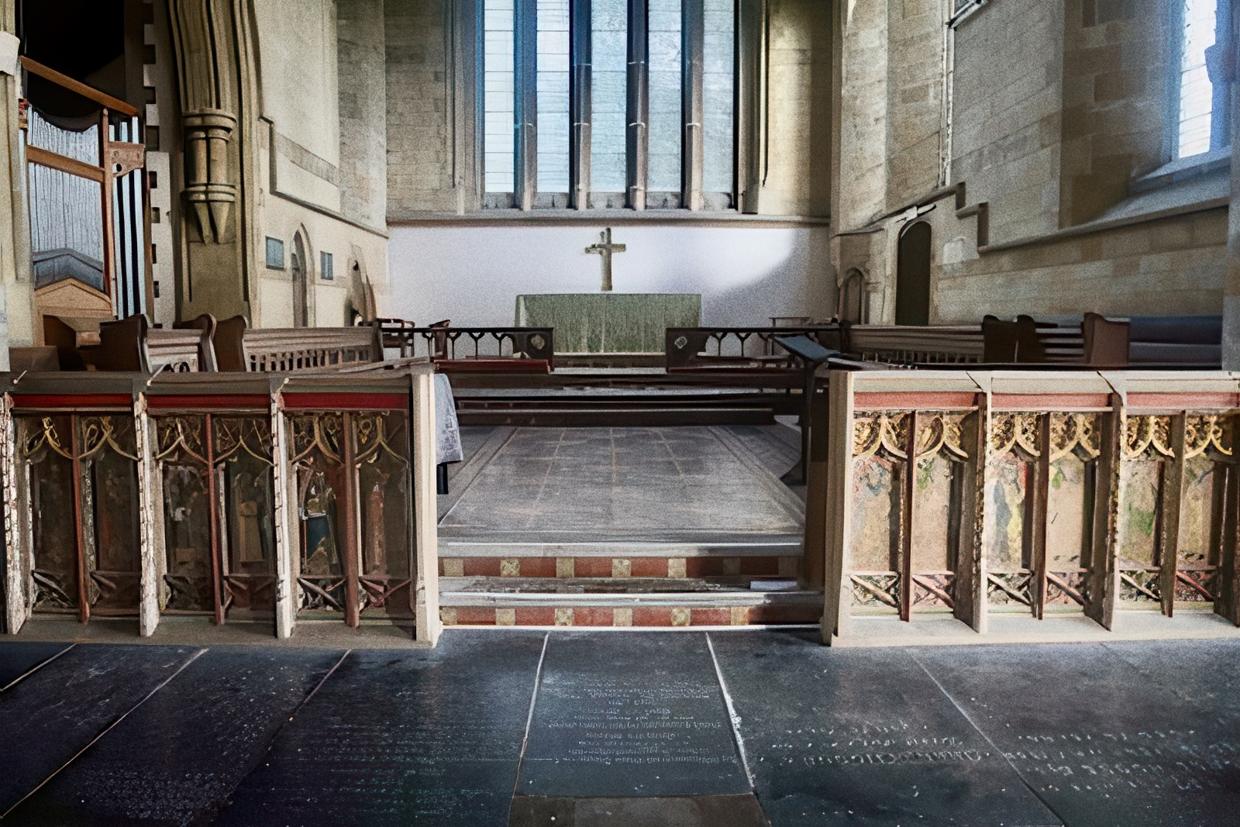
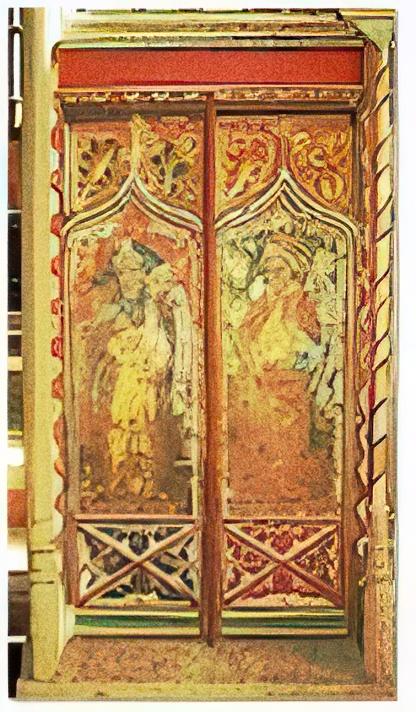
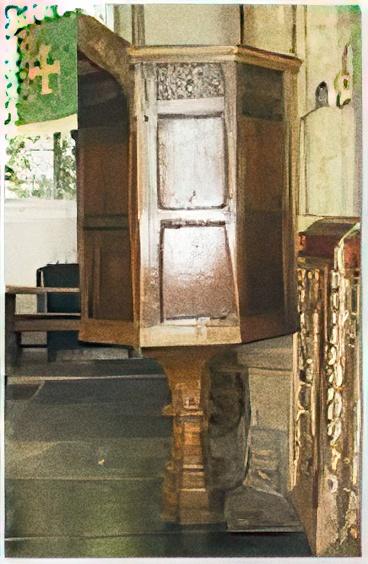
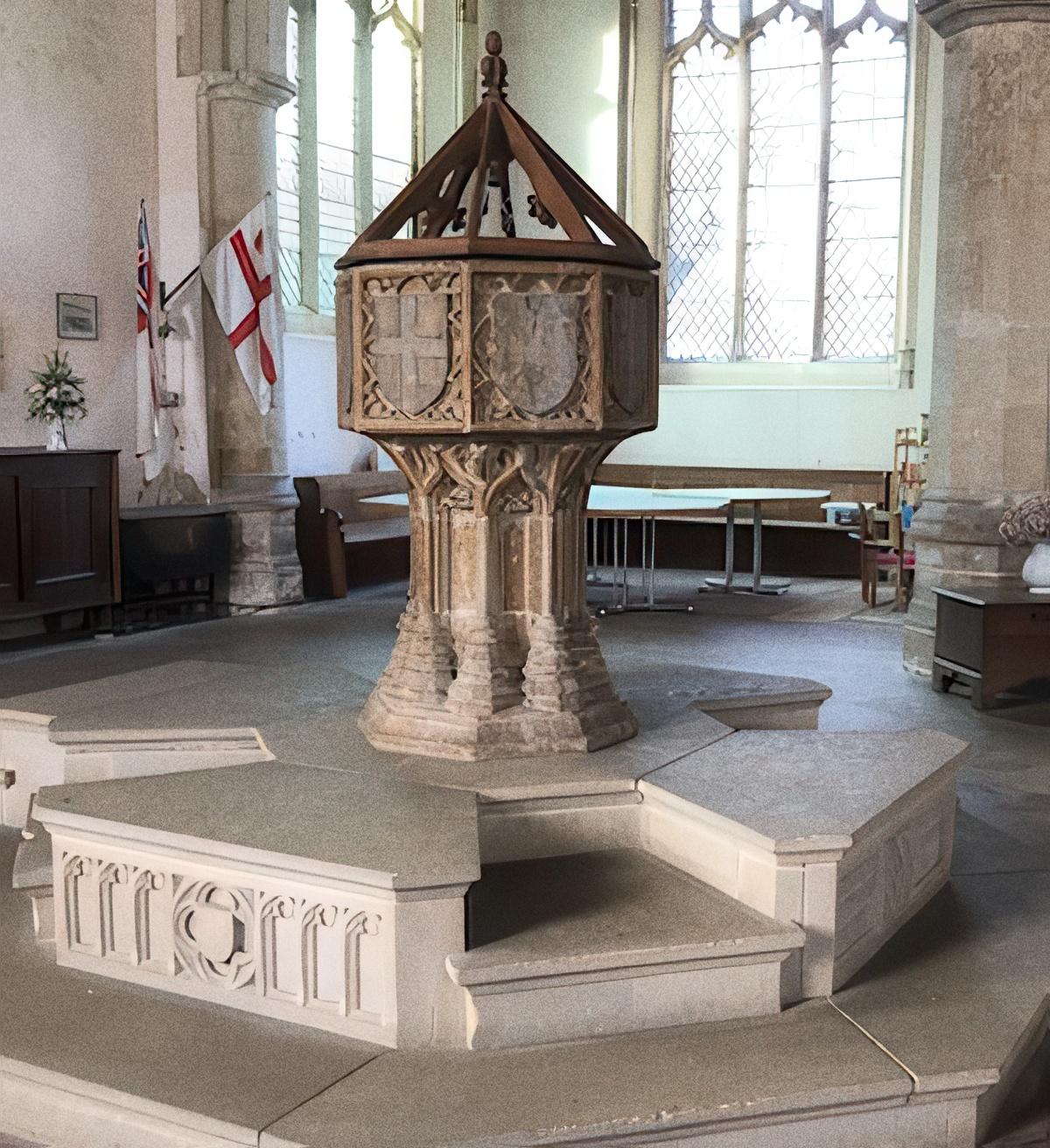
The rood screen was donated by John Miller and his wife Clarice. It sustained considerable damage in the 17th century but is still worth seeing. It is one of the few examples showing Old Testament Prophets rather than the Twelve Apostles.
There was much restoration carried out in 1635 during which time the pulpit was installed.
The octagonal font is 15th century. The panels contain painted shields. The cross of St. Andrew, The cross of St. George, The instruments of the Passion, the three coronets for the See of Ely, Three crowns for East Anglia and Three chalices for the Blessed Sacrament.
The Bells
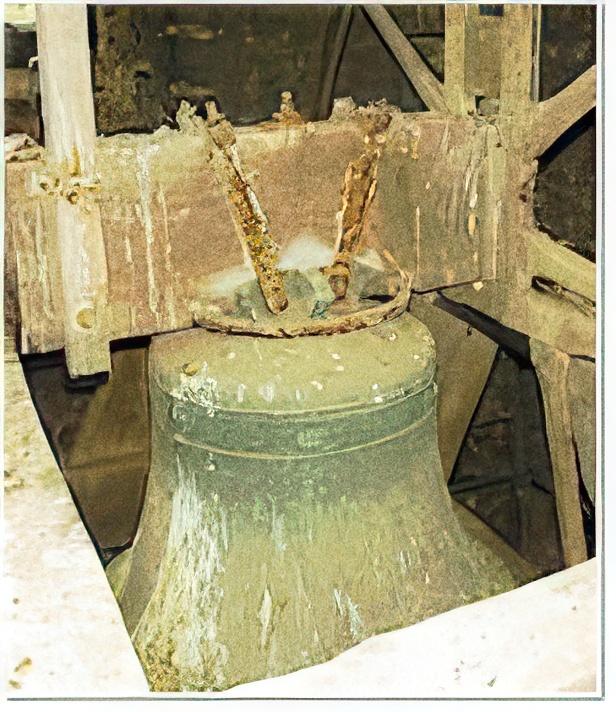
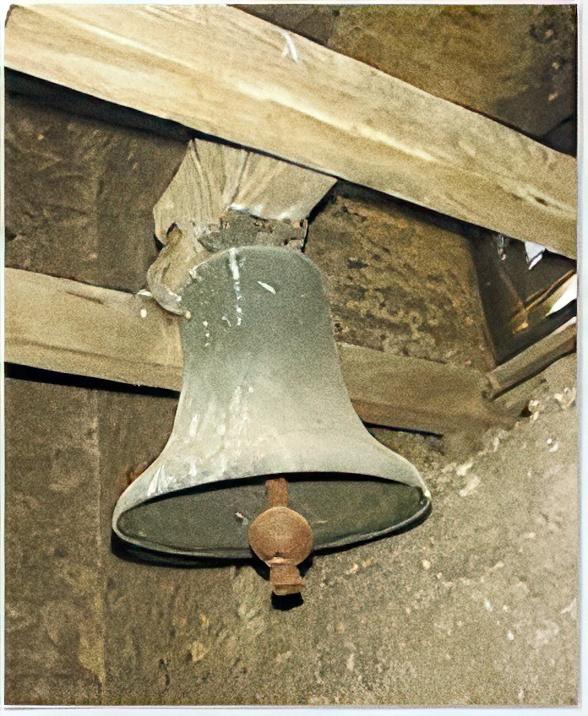
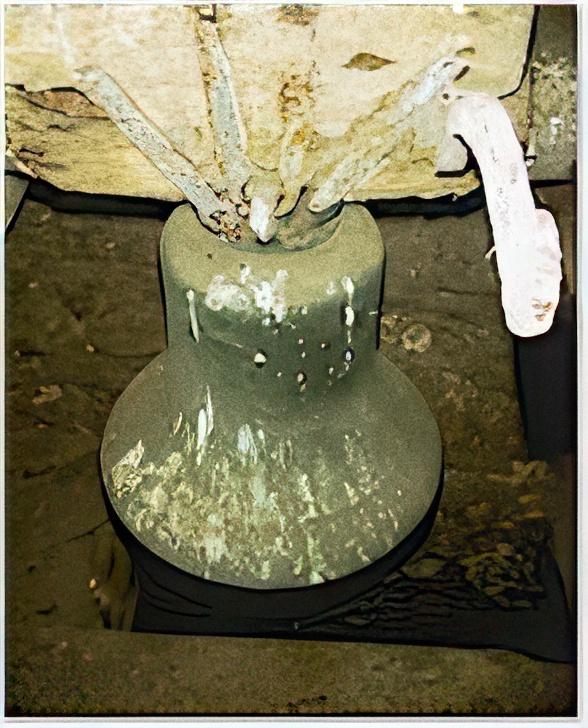
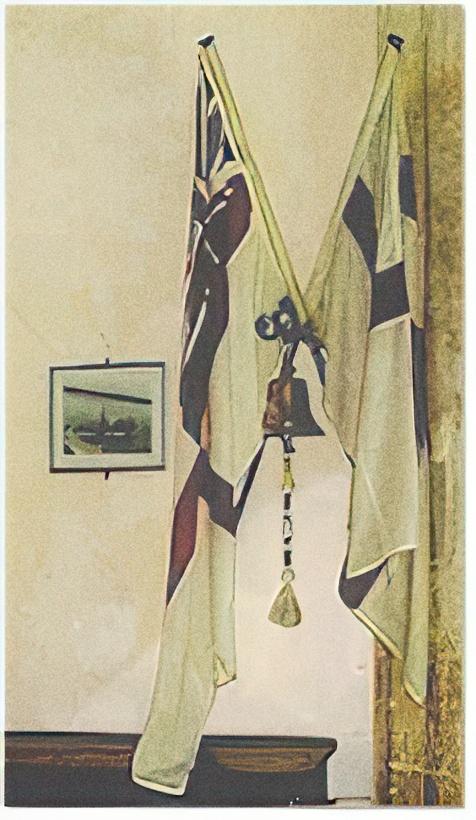
There are three bells in Thornham Church. Two in the tower and one in the nave. Of the two in the tower, the larger bell was made in 1865 by J. Taylor & Co., of Loughborough. It has a diameter of 38½ inches and weighs approximately 10 cwt. The bell frame is mounted on massive bearers and its fittings ensured that the bell could be swung through a full circle.
The second and smaller bell is one of the oldest known bells in the country, possibly dating from the 12th century. The bell has a diameter of 17½ inches and weighs about ¾ cwt.
Advisor on Bells, Dr. Paul Cattermole reported to the Diocese in 1993 that this bell is one of three of the oldest bells in Norfolk. Snettisham and Heacham have similar bells and they are also similar in design to the inscribed bell at West Newton which has been attributed to a King's Lynn bell-founder. Dr. Cattermole goes on to say in his report "Small bells like this were probably intended to be used as sacring bells, rung at the elevation of the Host during the mass and few survived the Reformation." (Sacring bells are also known as sanctus bells)
This ancient bell is secured to a timber headstock by means of nailed bands. The bell has clearly been disused for many years. "The ancient ironwork", Dr. Cattermole says, "although now very heavily corroded is of great interest." It is of great archaeological importance and will remain for the time being high up in the tower until decisions are made regarding its future. The third bell hangs in the nave on the west wall.
The minesweeper HMS Thornham gave its ship's bell to Thornham Church in 1969 and it is rung only once a year. Each November it is rung to signal the two minutes silence. The ship's flag that accompanies the bell was flown on HMS Victory. On the wall alongside the bell there is a framed photograph of HMS Thornham.
For architectural information and details of the building's listing status please visit The National Heritage List for England.
You will find many more pictures, some of them quite old and historic, of the inside of All Saints church at Thornham Village - internal views of church and even more of the outside at Thornham Village - external views of church.